Gulf Airspace Crisis: What Employers Owe Stranded Staff Now
On Sunday, July 26, an oil tanker struck a naval mine in the Strait of Hormuz and exploded. No casualties have been confirmed, but that is almost beside the point. The mine had been sitting there since March 2026, when Iran began seeding the strait in response to US and Israeli strikes under Operation Epic Fury. US Central Command destroyed 16 Iranian minelaying vessels on March 10. Mine-clearance operations have continued since. The strait is still not safe.
If you have employees in the Gulf right now - traveling for work, stationed in Dubai, transiting through Doha, running a site visit in Riyadh - that explosion should be prompting a series of very specific questions. Do you know where they are? Do they have a way out? And if their flight is cancelled tonight, who is responsible for what?
What Is Actually Happening Right Now
Since the conflict began on February 28, 2026, the Gulf aviation picture has deteriorated in stages. The current situation as of July 27:
- EASA has directed all regulated carriers to avoid the airspace of the UAE, Bahrain, Kuwait, and Qatar at all altitudes, plus the Gulf of Oman west of 58 degrees east longitude. The advisory is in place until at least July 29 - and extensions are likely given that active operations continue.
- On July 18, Kuwait closed its entire airspace after renewed Iranian missile and drone attacks, forcing Kuwait Airways to reschedule the majority of its flights and other carriers to reroute with no notice.
- More than 4,000 flights per day are being cancelled across the region. This is not disruption in the ordinary sense. This is a sustained operational shutdown.
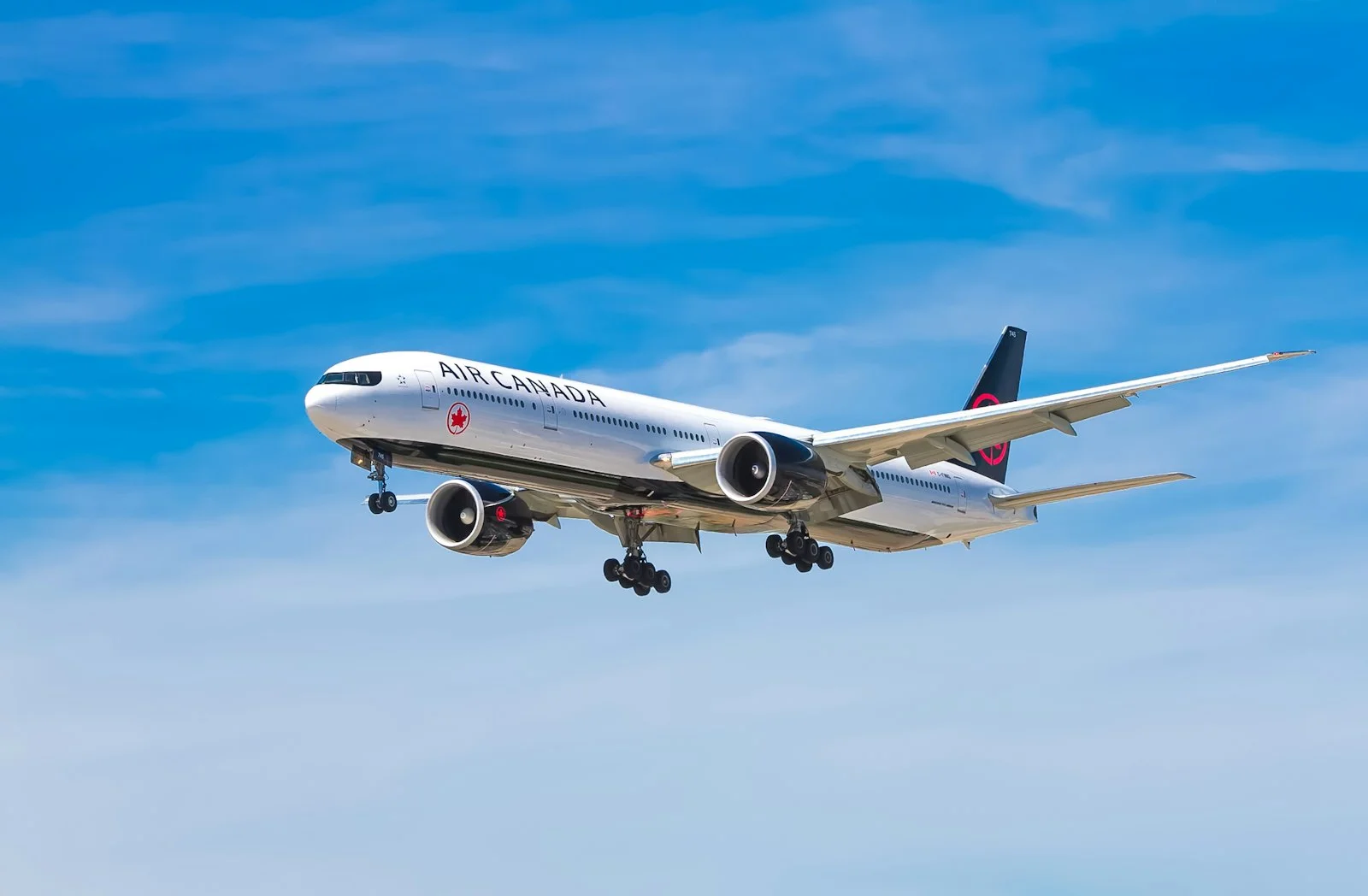
- Airlines that have suspended or heavily curtailed services include British Airways, Lufthansa Group, KLM, Air Canada, Singapore Airlines, Air France, Air India, Cathay Pacific, Virgin Atlantic, and Wizz Air. Several have extended suspensions to October 24, 2026 - three months from now.
- Five governments, including Australia, Canada, and New Zealand, have moved Gulf destinations to Level 3 (“Avoid Non-Essential Travel”), with advisories explicitly warning that airspace may close at short notice, flights may change without warning, and borders may close.
KLM ran a dedicated evacuation flight last week to bring stranded travelers and airline colleagues back to the Netherlands, operating in formal cooperation with the Dutch Ministry of Foreign Affairs. That is the scale of what is happening.
We covered the early-stage Middle East risk picture in our Q2 2026 travel risk briefing. The situation since then has fundamentally changed. The question now is not whether to send people to the region - it is what you owe the people already there.
The Employer Problem That Airlines Will Not Solve for You
Here is where risk managers get caught out. When flights cancel due to armed conflict, airlines invoke the “extraordinary circumstances” clause - and under EU Regulation 261/2004 and equivalent frameworks, this typically exempts them from paying fixed financial compensation (the €250-€600 per-passenger amounts). Airlines have been leaning heavily on this clause in recent weeks.
But - and this is the point many organisations miss - extraordinary circumstances does not eliminate the airline’s care obligation, and it does nothing to eliminate yours. As aviation expert Steve Reid noted in commentary published July 24: “Extraordinary circumstances doesn’t mean passengers have no rights at all; airlines still owe a duty of care.” That duty covers meals, accommodation, transfers, and communication access for stranded passengers.
Your duty of care obligation as an employer goes further. Under the Health and Safety at Work Act 1974 in the UK, work health and safety legislation across Australia and Canada, and case law in multiple jurisdictions, employers bear a non-delegable duty to take reasonable steps to protect employees during work-related travel. Sending someone to Dubai on July 15, watching the EASA directive expand on July 18, and then leaving them to manage flight cancellations through a consumer travel app - that is not reasonable care.
The liability question becomes concrete fast. If an employee is stranded in Kuwait for four days, cannot get out, and suffers harm - physical, psychological, or financial - because your organisation had no crisis protocol, no welfare check-in, and no means of evacuation support, you are looking at a workers’ compensation claim at minimum. In jurisdictions with strong occupational health frameworks, you may be looking at regulatory action.
Courts do not require perfection. They require evidence that you knew about the risk, made a reasonable assessment, and took proportionate steps.
The Insurance Gap You May Not Know About
Standard corporate travel insurance policies typically have conflict exclusions. If your policy was written before February 2026 and the Gulf was not flagged as a conflict zone at that time, you may still have coverage - but check the exact wording carefully, because many policies have since been updated or repriced at renewal.
The bigger gap is for organisations that send employees to the region under policies that exclude political violence, terrorism, or active conflict zones. If your traveler is stuck in Bahrain and your policy excludes “war and hostilities,” you are covering evacuation costs, accommodation, and repatriation out of pocket.
Specialist malicious risk coverage - kidnap and ransom, political violence, emergency medical evacuation, and crisis response retainers - is designed precisely for this environment. The time to source it is before the incident, not after.
What Employees on the Ground Are Facing
This matters because duty of care is not just legal - it is operational. Your employees in the Gulf are managing:
- Flight cancellations with little notice and limited rebooking options, since most seats on alternative routings are already full
- Increased overland transfer times as airlines reroute around Gulf airspace, adding 3-6 hours to connecting flights through alternative hubs like Nairobi, Mumbai, and Istanbul
- Hotel demand spikes in Dubai and Abu Dhabi as transit passengers are grounded for multiple nights
- Communications pressure - family members in home countries are watching the news and want contact
- Uncertainty about whether the situation will improve or escalate, particularly given that Iran-Oman negotiations on the Strait produced “progress” on July 25 but a tanker still hit a mine the following day
This is a high-stress environment. Frequent welfare contact is not pastoral niceness - it is risk management.
Your Duty of Care Checklist for Right Now
If you have employees in the Gulf, in transit through the region, or scheduled to travel there in the next two to four weeks, these are the steps that matter:
1. Account for everyone. Run a location check through your travel management company or traveler tracking system. You need a confirmed status for every employee in or transiting the affected countries: UAE, Kuwait, Bahrain, Qatar, Jordan, Saudi Arabia, Israel. Do this today.
2. Establish a welfare communication cadence. For employees currently on the ground, a daily check-in is not excessive given the environment. Use your existing app, a messaging protocol, or direct contact. The goal is mutual awareness - you know they are safe, they know you are engaged.
3. Clarify your evacuation options. Talk to your travel management company about available repatriation routes. The EASA-directed avoidance zone means European carriers cannot use direct Gulf routings, but services through non-EASA-regulated carriers (Gulf carriers operating on shorter segments, Turkish Airlines, Ethiopian Airlines, Indian carriers) remain available in some markets. Know what the routing looks like before someone calls you at 2 AM needing a way out.
4. Review your insurance coverage now. Not during the claims process - now. Confirm whether your policy covers active conflict zone evacuations, what the notification requirements are, and whether there are any gaps for employees already on the ground when the advisory changed.
5. Suspend non-essential travel to the region. If there is no compelling operational reason for someone to be in the Gulf in the next three weeks, the decision is straightforward. Five governments are at Level 3. EASA is directing carriers out of the airspace. A documented assessment that concludes “non-essential travel is suspended pending review” is defensible. A decision not to make that assessment is not.
6. Communicate the decision framework clearly. Employees who have already booked personal or partner travel through the region need to know your policy. Your traveler tracking should flag personal trips that create welfare obligations the same as work trips - particularly if the employee is using company-booked flights.
7. Document your risk assessment. Keep a written record of when you became aware of the advisory changes, what decisions you made, and why. This is the evidence that demonstrates reasonable care. If something goes wrong later, this documentation is the difference between a defensible position and an exposed one.
8. Plan for the scenario extending to October. Several major airlines have suspended Gulf services until October 24, 2026. If your organisation has staff on longer-term rotations in the region, you need a resupply and welfare plan that does not rely on European carrier connectivity.
The Bigger Pattern
The Gulf crisis is the most acute example right now, but it is not the only one. The broader shift in the global risk environment over the past 18 months - conflicts in multiple regions, airspace closures, rapidly shifting government advisories - has repeatedly exposed the same organisational weakness: companies that treat travel risk as a procurement or HR function, rather than a safety function with legal weight.
The organisations that are managing well right now have a few things in common. They know where their people are. They have pre-negotiated crisis protocols with their travel management company. They carry specialist insurance that covers the gap between standard corporate policies and active conflict environments. And they have systems that surface advisory changes automatically, before someone on the risk team happens to read the news.
If that description does not match your current setup, a conversation with our team can help you understand what closing those gaps looks like in practice - without committing to anything.
The mine in the strait is not a metaphor. The people who laid it may not be able to fully account for its location. Your employees in the region need to know that someone can account for theirs.