Anak Krakatau Erupts: Jakarta Airport Duty of Care Playbook
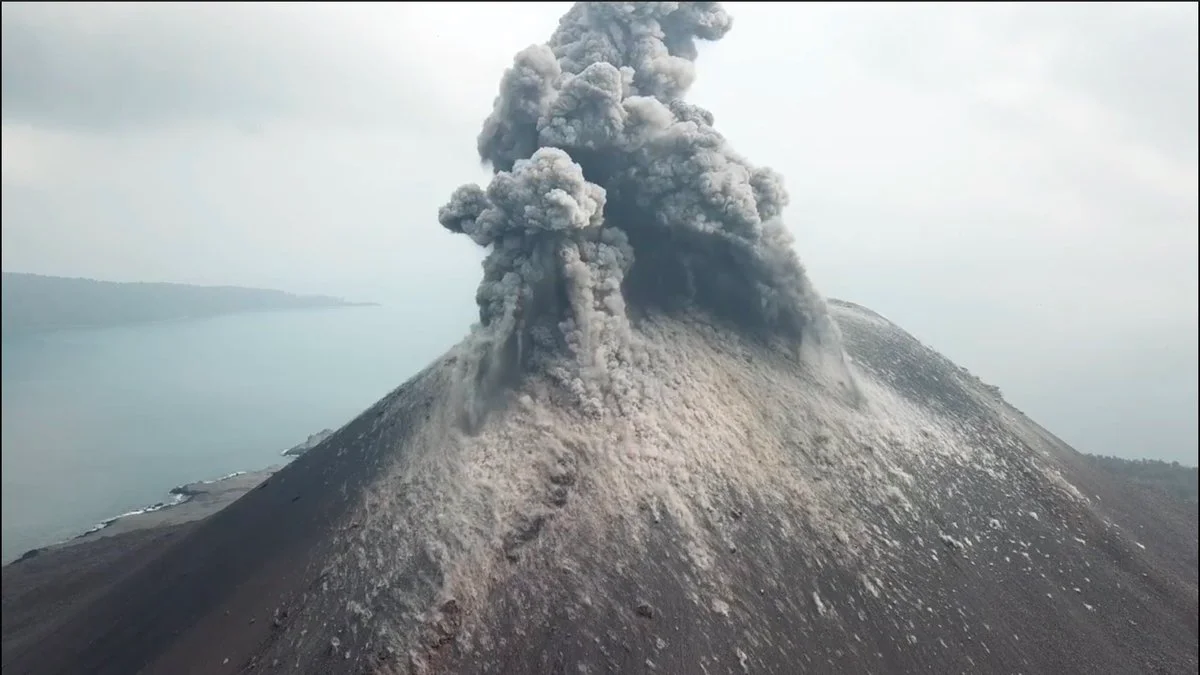
On the evening of Friday, 5 September 2026, Mount Anak Krakatau began erupting from the Sunda Strait between Java and Sumatra. By Sunday morning, eight Indonesian airports - including Jakarta’s Soekarno-Hatta International, one of Southeast Asia’s busiest hubs - had suspended all operations. Ash clouds reached 50,000 feet on the Sumatra side of the strait. The boom from the eruption was heard 700 kilometres away.
The numbers tell the story. About 2,300 flights were disrupted. At the four InJourney-managed airports alone, 268,539 passengers were affected. Over 170,000 were stranded. International routes to Singapore, Doha, Sydney, and Kuala Lumpur were severed. Schools across Jakarta, West Java, Banten, and Lampung shifted to remote learning. Indonesia’s health minister urged residents to stay indoors and wear masks to protect against ash-related respiratory, eye, and skin risks.
As of 7 September, several airports remain closed pending further ash clearance, and Indonesia’s Geological Agency has stated that the probability of additional eruptions in the coming days remains high.
If your organisation has employees, contractors, or business partners in or transiting through Indonesia right now, this is not a situation you can monitor passively.
Why This Eruption Is Not a Routine Disruption
Anak Krakatau - which translates as “Child of Krakatau” - emerged from the sea in the 1920s in the caldera left behind by the catastrophic 1883 Krakatau eruption, one of the deadliest volcanic events in recorded history. The 1883 event killed an estimated 36,000 people and triggered years of global temperature cooling.
The 2026 eruption follows a particularly sobering precedent. On 22 December 2018, an eruption of Anak Krakatau caused the collapse of the volcano’s southwest flank, triggering a tsunami that swept coastal areas of Java and Sumatra without warning. That tsunami killed at least 430 people. There was no seismic trigger and no earthquake - the standard inputs that activate conventional tsunami warning systems. By the time the waves hit, there was no alert.
That 2018 event should have fundamentally changed how risk managers think about volcanic hazards in Indonesia. The assumption that a volcano poses ash and lava risks but not tsunami risks was shattered. The current 2026 eruption is occurring on the same volcano, and the Geological Agency has confirmed activity remains elevated and intermittent as of Monday morning.
This is not a one-day disruption to plan around. It is an active, evolving situation with a documented history of catastrophic secondary hazards.
Who Has People in the Region
Indonesia is Southeast Asia’s largest economy and the world’s fourth most populous country. Jakarta alone hosts major regional headquarters for multinationals across financial services, pharmaceutical, oil and gas, manufacturing, and consumer goods.
The airport closures span a wide geographic footprint:
- Soekarno-Hatta International (Jakarta) - the primary gateway for international business travel into Java
- Halim Perdanakusuma (Jakarta) - Jakarta’s secondary airport and the main hub for charter and executive aviation
- Husein Sastranegara (Bandung, West Java) - serving the garment, textile, and manufacturing corridor
- Radin Inten II (Bandar Lampung, Lampung) - the main gateway for the agricultural and commodity south of Sumatra
That geographic spread matters. A risk manager focused only on Jakarta may miss that employees in Bandung or Lampung face distinct operational challenges: sustained ash exposure at ground level, disrupted road transport as ash coats highways, and closed schools that directly affect the families of locally-hired staff.
Aviation crews on long-haul routes with technical stops or layovers at Soekarno-Hatta have also been caught. Airlines operating crew changes through Jakarta found themselves scrambling for alternates as far as Surabaya, adding complexity for any corporate charter or executive flight movements through the region.
The Duty of Care Cascade Triggered Right Now
A volcanic eruption that closes international airports and generates ash hazards across four provinces activates a cascade of employer obligations. These are not aspirational - they carry legal weight for organisations subject to the UK Corporate Manslaughter Act, Australian Work Health and Safety Acts, or the ISO 31030 travel risk management framework.
Locate all your people. This is step one, and the most common failure point. Do you have a real-time view of who is in the affected region? Not just who was booked to be there - but who is actually on the ground? Pre-trip bookings captured in a travel management system are a starting point, not a complete picture. Contractors, employees who extended trips, and people travelling on personal time adjacent to business travel frequently fall outside that data.
Assess immediate health exposure. Volcanic ash is not simply an inconvenience. Fine tephra particles are hazardous when inhaled, particularly for anyone with pre-existing respiratory conditions. The Indonesian health ministry’s guidance to stay indoors and wear N95 or FFP2 masks should be communicated directly to any employees in affected provinces. Your organisation needs a mechanism to do this - it cannot rely on employees checking local news.
Don’t plan around provisional reopening windows. Transport authorities initially announced closures until 9:00 AM Monday, then extended them until 6:00 PM Monday. Volcanic situations do not operate on fixed timetables. Employees and their managers should not book onward travel based on provisional guidance that may shift again before lunch.
Map alternative egress. For employees who need to leave urgently - or those you may need to extract - what are the options? The Port of Merak in Banten connects Java to Sumatra by ferry. Train services between Jakarta and Surabaya are operating. Charter aviation out of airports further from the Sunda Strait ash cloud may be viable depending on real-time ash drift patterns. Your travel risk partner should be mapping these alternatives as the situation develops.
Communicate with families. For organisations with locally-hired Indonesian staff, school closures across Jakarta, West Java, Banten, and Lampung create a secondary problem. Employees who are parents are not going to be operationally focused if they cannot arrange childcare or if they are worried about ash exposure affecting their children. Acknowledging this in your internal communications is not soft management - it is practical crisis communication.
What ISO 31030 Requires at This Stage
ISO 31030, the international standard for travel risk management, outlines a risk treatment framework that applies directly to this situation. When a disruptive event affects in-destination travelers, the standard calls for:
- Immediate risk assessment updates reflecting the changed hazard landscape - what was a routine Indonesia travel risk profile yesterday is no longer current
- Direct communication to travelers with actionable guidance, not a forwarded news link
- Review of all upcoming travel scheduled to enter the affected region in the next 72 hours
- Documentation of decisions - if your organisation decides not to restrict travel or initiate extraction, the reasoning should be on the record
For organisations with formal travel risk programs aligned to ISO 31030, this is the moment that investment pays off. For those without, this is the moment you identify what you are missing.
HAAVYN’s duty of care resources cover how ISO 31030 applies to in-destination events and what a compliant response looks like in practice.
The 72-Hour Action List
If your organisation has employees in or around Jakarta, Bandung, or Lampung right now, here is what to prioritise over the next three days.
Within the next 4 hours:
- Pull a consolidated list of all employees, contractors, and extended workforce currently in or scheduled to travel to the affected provinces
- Send a direct communication to anyone currently in the region with specific health guidance: stay indoors, wear N95 or FFP2 masks, avoid outdoor physical exertion
- Instruct staff not to make onward travel plans until official airport reopening is confirmed and stable, not provisional
Within 24 hours:
- Assess whether any employees need to be extracted or repatriated and begin planning alternative transport routes
- Contact your travel insurer or risk partner to clarify coverage for extended hotel stays, missed connections, and alternative transport costs
- Brief senior managers whose teams are in the region with a clear situation summary - they should not be sourcing their information from general news alerts
Within 72 hours:
- Review your travel risk policy for any planned Indonesia travel over the next 30 days, particularly to West Java and Banten
- Update your pre-travel briefing for Indonesia to reflect current volcanic risk levels, not the standard pre-2026 health and security messaging
- Conduct a post-event review: what did you know, when did you know it, and what gaps did this event expose in your visibility or response capability?
What the 2018 Tsunami Should Have Taught Us
The 2018 Anak Krakatau collapse killed 430 people on the beaches of Java and Sumatra on 22 December - one of the busiest travel and event periods of the year. Multiple resorts in the affected coastal zones were hosting corporate events and year-end gatherings when the tsunami struck without warning.
The failure was not that people were in Indonesia. The failure was that no organisation had a mechanism to alert them, locate them, or begin extraction in the immediate aftermath. Companies spent days trying to confirm whether their people were safe, relying on employees to self-report while communications infrastructure was damaged and transport routes collapsed.
That failure is repeatable. Right now, the same information gap exists for every organisation without real-time location visibility into their Indonesian workforce.
The current 2026 eruption has not produced a tsunami. But with the Geological Agency confirming continued elevated activity, the risk profile has not returned to baseline. Treating this as “resolved” because airports are reopening would repeat the same structural mistake that made 2018 as damaging as it was.
How HAAVYN Handles This
HAAVYN’s Radar platform monitors more than 1,200 intelligence sources across 220+ countries in real time. When Anak Krakatau began erupting on Friday night, alerts began generating for the Sunda Strait corridor within minutes - well before the official airport closure announcements on Sunday morning.
The platform’s mobile app enables direct push notifications to employees in the affected area, two-way check-ins, and SOS escalation for anyone who cannot be confirmed safe. For organisations using HAAVYN, the question “where are our people?” has a live answer, not a post-event reconstruction exercise.
If the past 48 hours have exposed gaps in your organisation’s travel risk visibility, it is worth seeing how the platform works under pressure. You can book a call with the team and walk through what real-time coverage looks like for a region like Indonesia.